
- Home
- Degassing Valve Academy
- Packaging Still Swelling with a One-Way Valve? Venting and Leak Checks
Packaging Still Swelling with a One-Way Valve? Venting and Leak Checks
Where to start when packaging swells or appears to leak
Swelling does not necessarily mean a one-way valve has failed. Check the gas source, vent path, capacity and seals to distinguish normal venting from unintended leakage in ingredient, feed and industrial powder packaging.

If a bag still swells after a one-way valve has been installed, does that mean the valve has failed?
A one-way valve vents only when the pressure difference reaches its opening condition. Slight swelling is therefore not necessarily abnormal. Assess the gas source, progression of swelling, gas path and sealing condition together.
For food ingredients, animal feed and industrial powders or granules, clarifying operating conditions first helps narrow down the problem.
Identify the gas source and record when swelling occurs
Swelling may relate to gas generated by the contents, air entrained during filling or changes in the transport environment. Before inspecting, record:
- Whether swelling appears immediately after filling or only after storage.
- Whether the bag remains stable or becomes increasingly taut and distorted.
- Whether the issue is concentrated in particular products, batches, equipment or transport routes.
- Whether the formulation, bag material, valve or process settings have recently changed.
If a food product that should not generate gas shows abnormal swelling, investigate product and process causes as well. A valve helps vent gas; it cannot establish that the contents are in good condition.
If swelling continues, inspect the gas path first
An obstructed or blocked gas path can affect valve operation. Inspect both outside and inside the bag.
Outside, check whether labels, tape, outer packaging or stacking obstruct the outlet. Verify the bag opening and valve position against installation requirements.
Inside, look for powder, fragments, oil or liquid contacting the inlet. With fine powders, inspect the filter and internal mechanism even if no obvious external defect is visible.
Keep samples in their original condition. Dismantling or cleaning the valve yourself may remove evidence needed to identify the cause.
Confirm that venting capacity matches actual requirements
After confirming a clear gas path, check whether opening conditions and flow are suitable for the current packaging application.
Changes in filling speed, product density, bag weight or gas generation may require reassessment. Previous satisfactory operation does not rule out a mismatch between the valve and current needs.
In comparison tests, keep the bag material, fill weight and environment as consistent as possible. Change one factor at a time to make the results easier to interpret.
Check the bag, joints and valve separately for suspected leaks
Overall package airtightness depends on several components working together. Inspect in this order:
| Inspection point | What to check |
|---|---|
| Bag body and mouth seals | Holes, wrinkles, trapped powder or incomplete seals. |
| Joint between valve and bag material | Misalignment, locally unsealed areas or material damage. |
| The valve itself | Whether opening, venting and reclosing work correctly. |
For powders, pay particular attention to dust contamination at the bag seal or valve joint. If problems cluster in one production period, compare equipment and cleaning records from that period.
Distinguish normal venting from unintended leakage during testing
A one-way valve is designed to release gas outward. Gas leaving the outlet during a test may be normal if the pressure difference reaches the opening condition.
Define the test purpose first: checking the airtightness of the bag and joints, or measuring valve opening, flow and closing performance? Each purpose requires appropriate methods and conditions.
Squeezing the bag, listening for sounds or watching it flatten cannot fully establish valve quality.
Use process records to investigate variation within a batch
If only some packages are affected, compare valve and film batches, installation position, sealing temperature, pressure and dwell time, as well as fill weight and the condition of the contents.
Keep both normal and abnormal samples, together with photos, timing and process records, to help the supplier analyze the issue efficiently.
For persistent swelling or suspected leakage, checking the gas source, vent path, seals and valve function step by step helps identify where improvement is needed. Please share your product and packaging information with Tungyi to discuss further inspection and specification assessment.
Further reading: How to Choose a One-Way Packaging Valve: Contents, Filters and Equipment
-
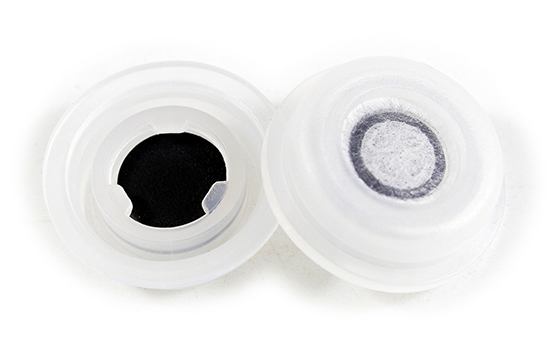
Product & Technology
How to Choose a One-Way Packaging Valve: Contents, Filters and Equipment
October 8, 2026
-

Usage & Installation
Packaging Still Swelling with a One-Way Valve? Venting and Leak Checks
October 8, 2026
-

Product & Technology
One-Way Degassing Valve
March 21, 2025
-

Product & Technology
What is a PE One-Way Degassing Valve?
March 3, 2025
-

Product & Technology
Is PE Recyclable?
March 12, 2025
-

Product & Technology
How Is a Degassing Valve Different from a Regular Vent Hole?
March 6, 2025