
- Home
- Degassing Valve Academy
- How to Choose a One-Way Packaging Valve: Contents, Filters and Equipment
How to Choose a One-Way Packaging Valve: Contents, Filters and Equipment
Start with the product and its venting requirements
Food ingredients, agricultural products, animal feed and industrial powders have different packaging needs. Assess the gas source, contents, filter, film and equipment, then verify venting and sealing with actual packaging tests.
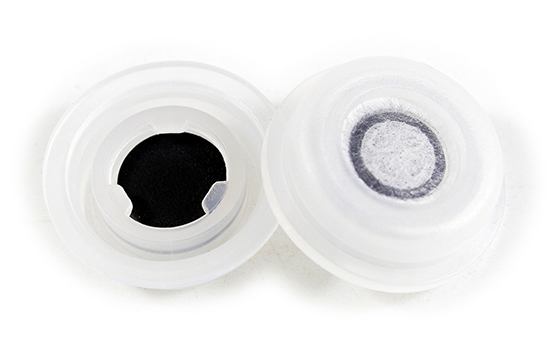
After filling, continued gas generation or entrained air may cause bags to swell or stack unevenly. A one-way valve may be worth evaluating when gas must escape while limiting outside air flowing back through the vent.
Products and packaging conditions vary widely between industries. Selection should consider the purpose of venting, product properties, filter configuration, bag material and installation equipment together.
First, why does the package need to vent?
Begin by identifying where the gas comes from and which problem the valve is expected to solve.
| Packaging situation | Selection considerations |
|---|---|
| Contents continue generating gas during storage | Gas generation rate, duration and required venting capacity. |
| Air is entrained while filling powders or granules | Filling method, entrained air and subsequent stacking conditions. |
| Transport or environmental changes create a pressure difference | Temperature, changes in external pressure and the bag’s mechanical limits. |
A one-way valve primarily controls outward gas flow. Packages requiring two-way pressure equalization, pressure resistance or safety pressure relief need a separately verified design; an ordinary packaging valve is not a direct substitute.
Are the contents granules, fine powder or a moist product?
The physical state of the contents affects the likelihood of valve contact, contamination and blockage.
For granules, assess the proportion of fragments, fill weight and handling method. For powders, consider particle size, dust generation and the likelihood of fines entering the gas path.
For moist, oily or viscous products, determine whether contact with the valve affects materials, sealing or venting. Provide samples and operating conditions so the supplier can evaluate a suitable design.
Products in the same food or industrial sector do not necessarily need the same specification. Detailed information about the contents is more useful than an industry label.
With or without filter media?
Filter media can reduce contact between powders or fragments and the internal mechanism. Performance depends on the filter type, design and product properties.
Check the following:
- Whether the contents include fine particles that readily become airborne.
- Whether the contents frequently contact the valve inlet during filling or transport.
- Whether venting remains adequate after the filter contacts the product.
- Whether the filter media are compatible with the contents.
Standard filter paper must not automatically be treated as a liquid, oil or microbial barrier. State these requirements explicitly and confirm the relevant test evidence.
Match dimensions and bag material to the equipment
Valve diameter, thickness and shape affect feeding, positioning and sealing-tool compatibility. Provide the equipment model, current valve drawing and installation method to confirm reliable production-line use.
For heat-sealed installation, check compatibility between the valve body and the bag’s sealant layer. Adjust temperature, pressure and dwell time to the materials and equipment, then inspect the seal and installed valve function.
Reconfirm operating conditions after changing the bag material or valve, even when dimensions are similar.
Evaluate opening pressure and flow against venting needs
Opening pressure is the internal-to-external pressure difference required to begin venting. Flow rate describes venting capacity at a specified pressure difference. Assess both; valve size alone does not establish performance.
Continuous gas generation and brief air entrainment during filling are different situations. Consider expected gas volume, bag strength, fill weight and logistics, then verify the selection with actual packaging tests.
What information helps when requesting a quotation?
Provide the product name and physical state, venting purpose, weight per bag, film structure, equipment details and storage and transport conditions. Include necessary material-compatibility information for industrial ingredients with special chemical properties.
Choosing the right one-way valve requires the product, packaging and equipment to work together. Please share your packaging requirements and sample information with Tungyi to discuss suitable specifications and further evaluation.
Further reading: Packaging Still Swelling with a One-Way Valve? Venting and Leak Checks
-
Product & Technology
How to Choose a One-Way Packaging Valve: Contents, Filters and Equipment
October 8, 2026
-

Usage & Installation
Packaging Still Swelling with a One-Way Valve? Venting and Leak Checks
October 8, 2026
-

Product & Technology
One-Way Degassing Valve
March 21, 2025
-

Product & Technology
What is a PE One-Way Degassing Valve?
March 3, 2025
-

Product & Technology
Is PE Recyclable?
March 12, 2025
-

Product & Technology
How Is a Degassing Valve Different from a Regular Vent Hole?
March 6, 2025